Our first grandchild, Lizzie, graduates today. The child was born September 2001, on our wedding anniversary and a few weeks after the terrorist bombings of New York City, attempt at Washington and crash into the Pentagon. School was closed and began on-line classes in March this year. Her Senior prom was cancelled due to Covid-19. She had already purchased her dress.
Now it is time for graduation and it too will be peculiar. The school decided to have each graduate walk across the stage to get their diploma. BUT there will only be one family in the auditorium at a time. The staff will be there from 8:30 to 9:30PM, or some such. Long day for them. Lizzie’s time is scheduled for 10:30 AM. At first they were limiting attendance to four people per student. That meant Bob and I would have to decide which one of us was attending. Then they changed it to seven people per student. Whew! now we both get to attend.
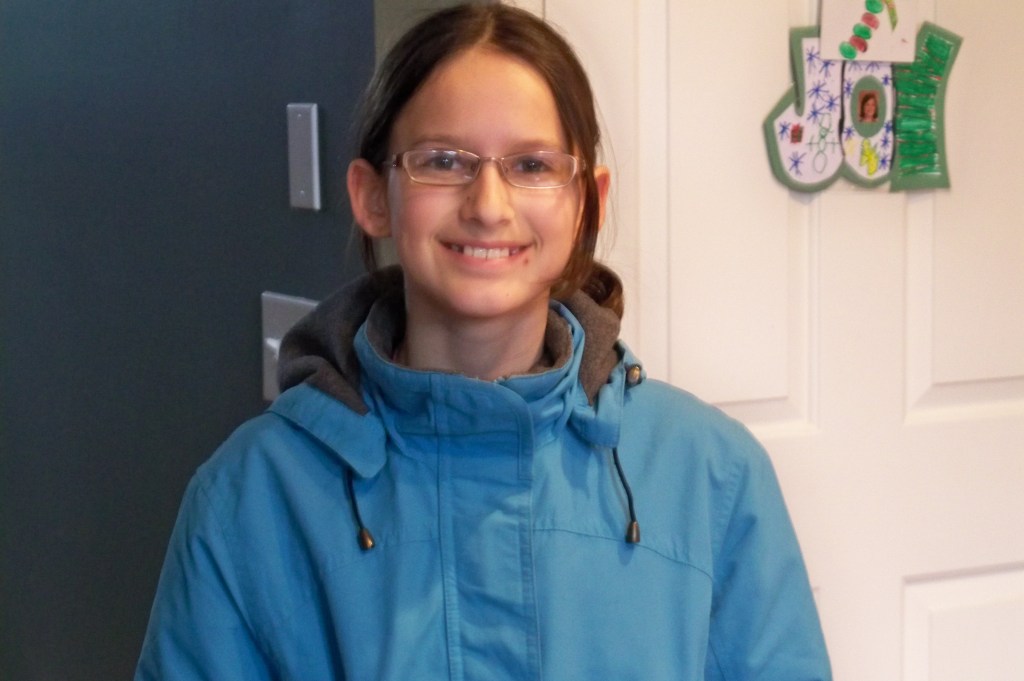
This child has always been shy and does NOT like to have her photo taken. Recently, she did like her new shirt and let me get this photo.
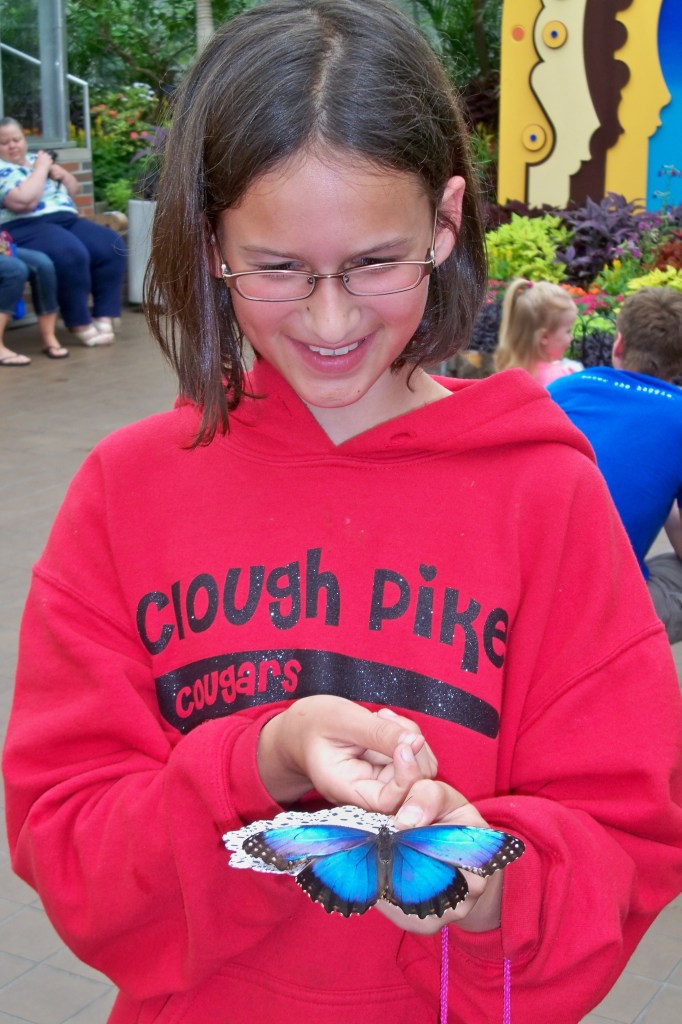
Skidamarink and her cousinHer baptism with Camp Counselors (Pop in the blue shirt in background!)
This sweet girl won three academic awards her senior year. The program was on YouTube with teachers and administrators making the announcements, before no in house audience. Two years in a row she won an award in American Sign Language. She will enroll in the local branch of University of Cincinnati this autumn. The world is in store for a great young lady!!
As a volleyball player she is ALWAYS in motion!
Go 32!
Please pray for her future! I often sang this to her when she was very young. If I am not mistaken the “I love you” at the end is done in American Sign Language!
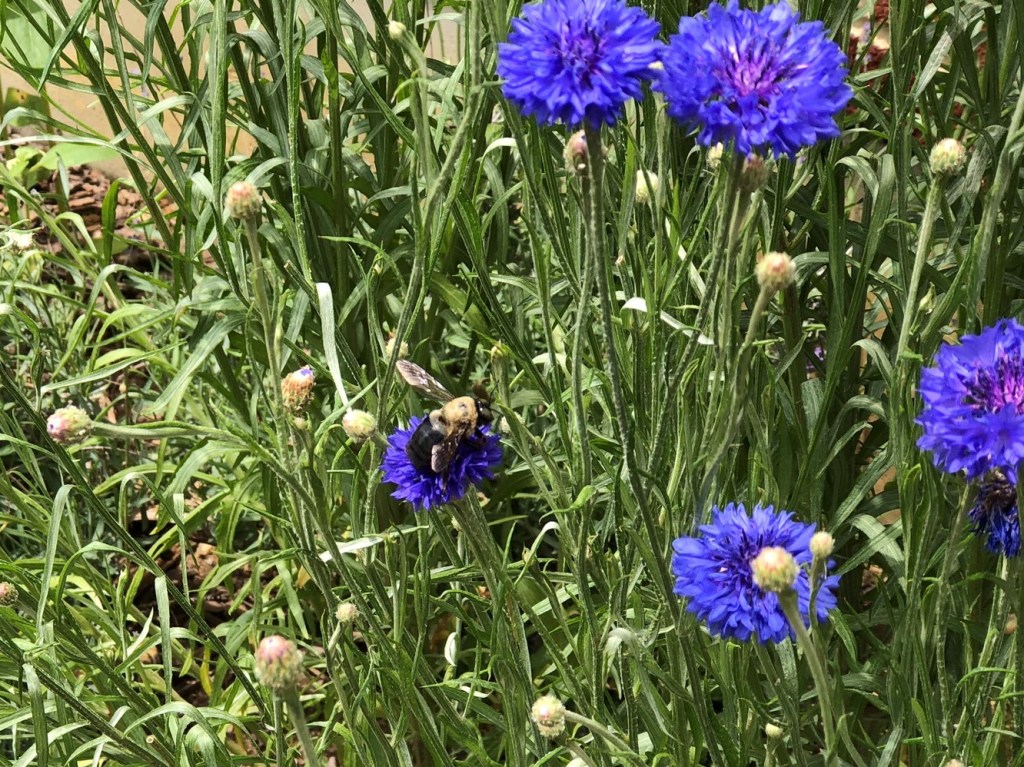
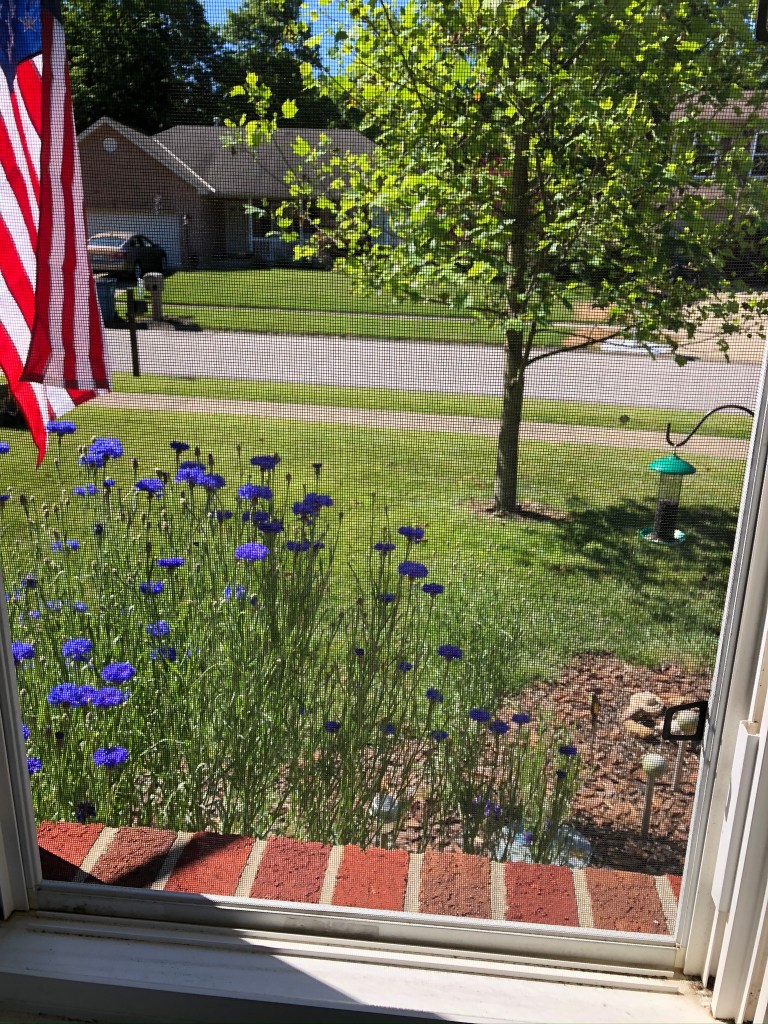
Bachelor Buttons reseeded themselves again and have been gigantic this year of mild weather. In the yard recently I captured a shot of this guy.
As I type this I can hear his honeybee cousin out the open window on the same group of flowers!
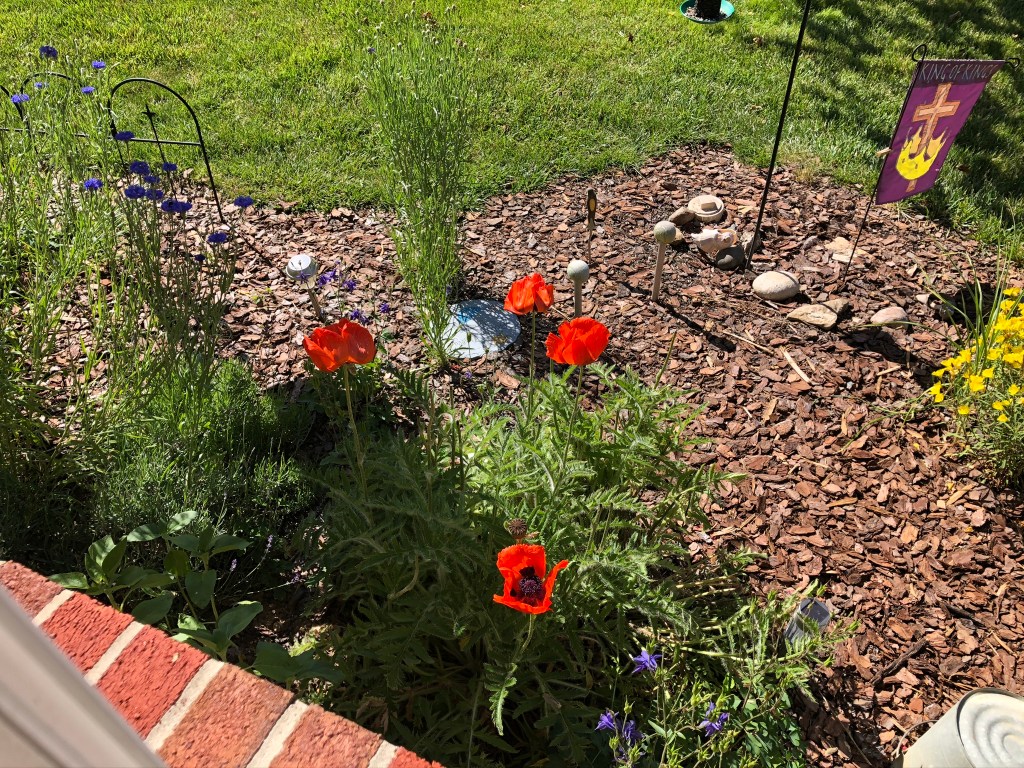
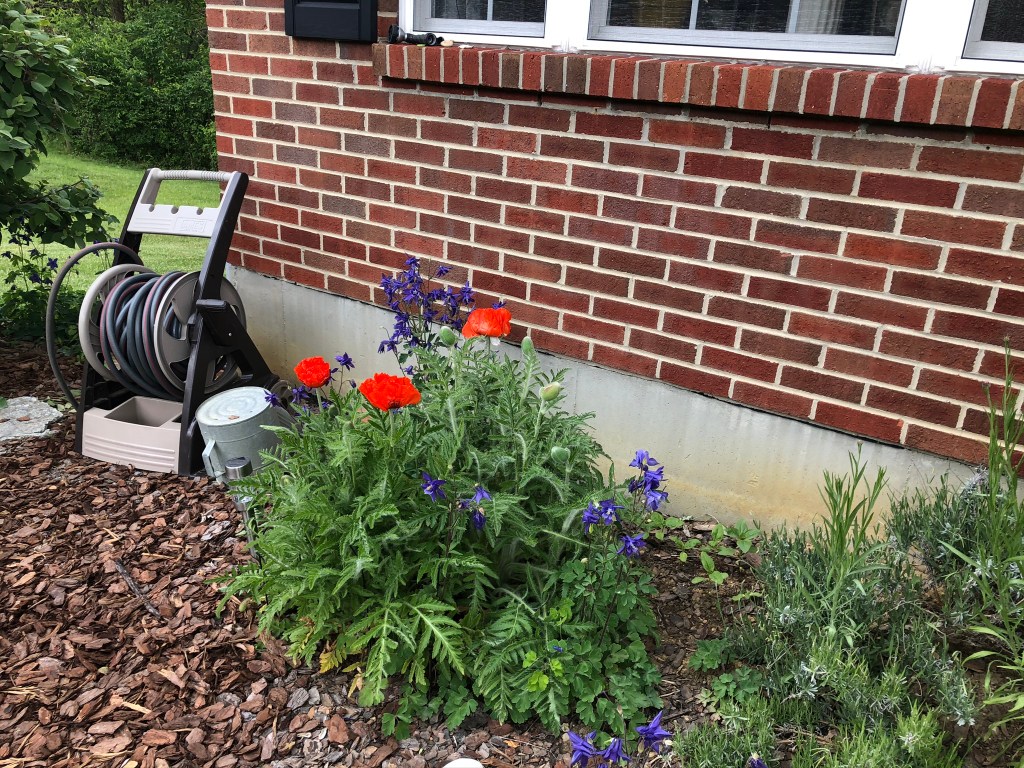
I think the heat and rain have about finished the poppies. And then, they keep blooming! I may try to thin them and move them about when they go dormant. Then again, I hesitate for fear I will damage or kill one!
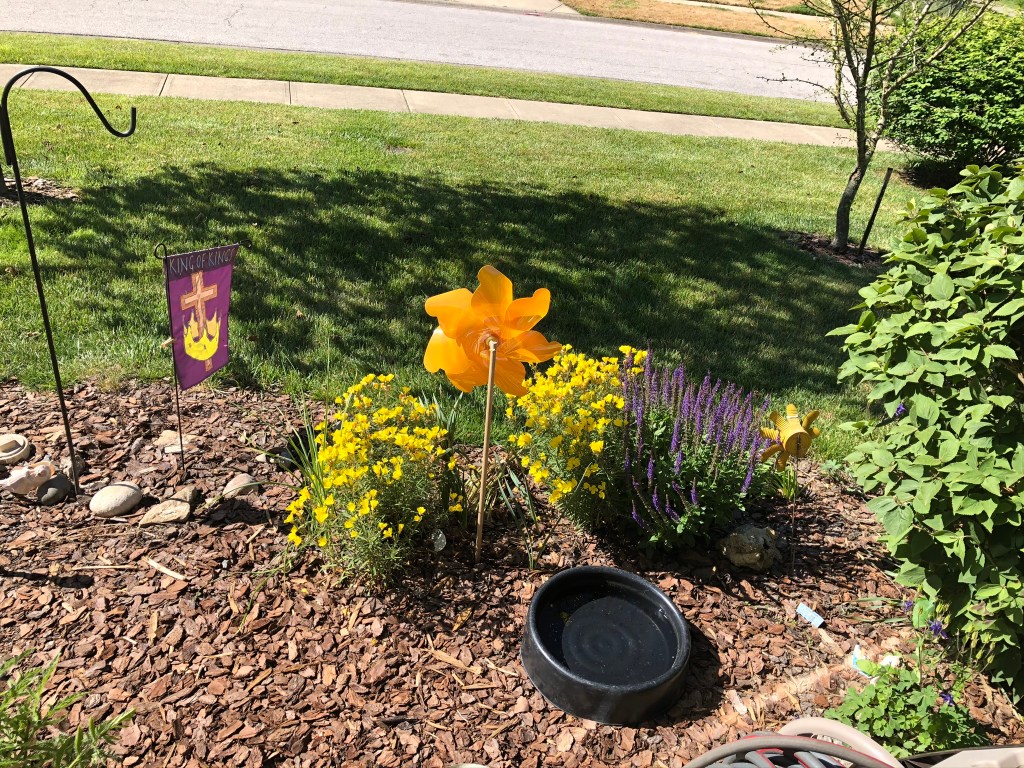
Planted this cheery yellow perennial a couple years ago. It is flourishing this spring. Would have to go out to the garden and get the tag to know it’s name. I keep forgetting it. I can use it in cut flower arrangements as long as it keeps access to the sun.
Purple Salvia and Lemondrop Oenothera – no wonder I can’t remember it!
PREVIEW OF COMING ATTRACTIONS: Bob has hidden some sunflower plants just next to the poppies. Perhaps we will have groups of birds at the window in those sunflowers if the deer do not eat off the flower heads before they bloom!
The Nature Conservancy has a preserve called Edge of Appalachia. It is co-owned and operated with Cincinnati Museum Center. The property is in Adams county and is one of the most biodiverse natural areas in the region. We had never been there until recently.
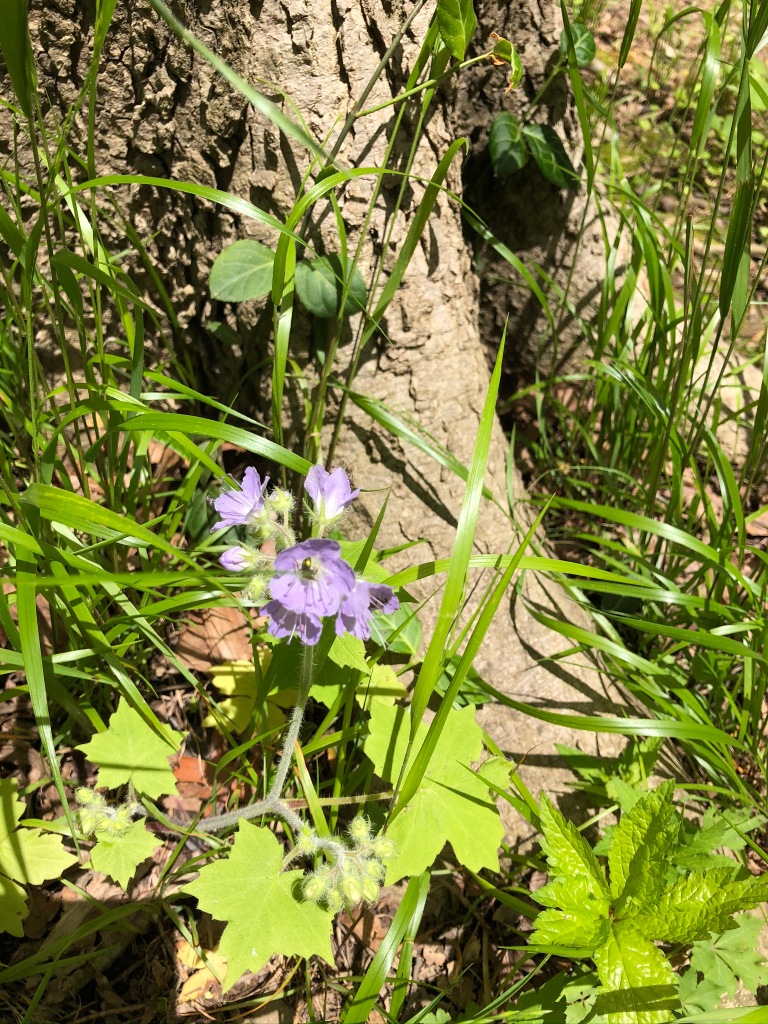
We hiked the Lynx Prairie Preserve Trails. (We actually missed a tiny portion as the rain began to threaten us.) I was delighted to find some flowers I had not seen before and one I see rarely.
As we entered the trail this beauty greeted us. At first I thought it might be an Indian Paint Brush. Turns out it is also known as Scarlet Painted-Cup.
Wildflowers in color by Arthur Stupka says, “The true flowers are greenish-yellow and practically concealed by vermilion or scarlet tinged upper leaves.”
WHAAAT? I am not even looking at the flower? These are the first ones we saw on this walk and I thought perhaps someone had long ago dropped a few seeds in this areas. Nope. They are wild and we proceeded to see scads of them as we walked further! They do not remind me of the same flower we saw in the Southwestern States.
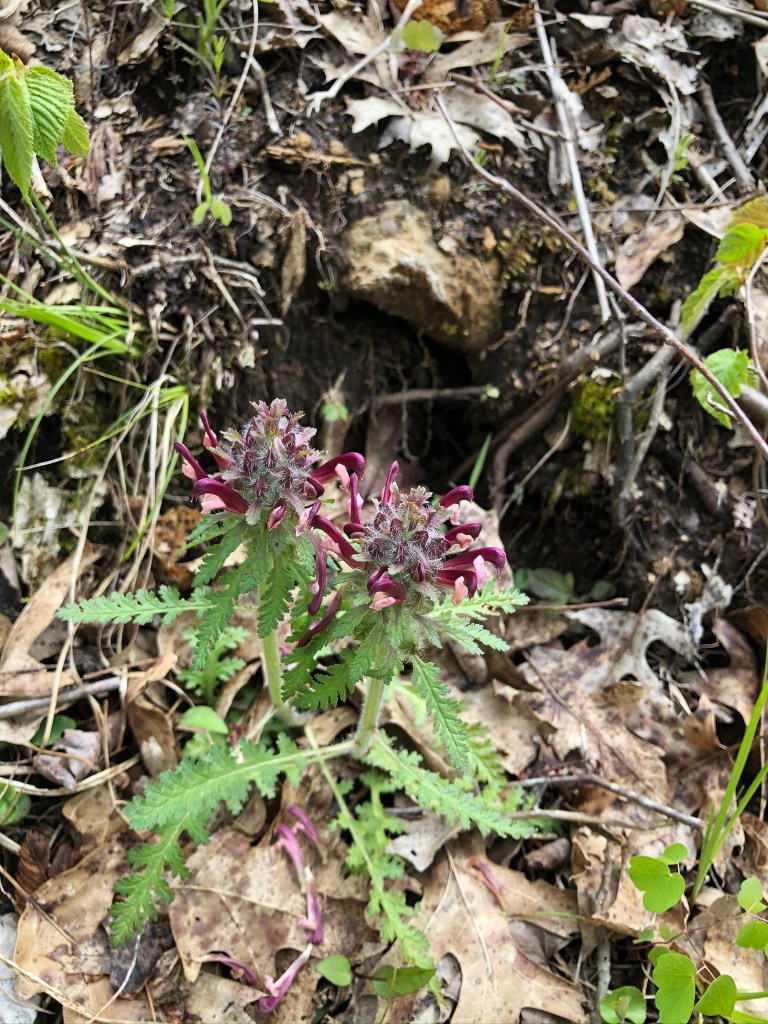
This beauty got a crummy name: “Common Lousewort.” It is also known by a much nicer name, “wood-betony.” So peculiar! I think it is lovely. The flowers can be yellow, white or the red ones we saw.
The trail was 1.3 miles (three interconnecting loop trails.) Described as easy. I want to return there. Wondering if the partial loop we skipped had Lady Slipper’s? Pink, yellow or white? I’m game!
Tomorrow I will show my two FAVORITES from this hike!
So my husband has been stir crazy and when I walk into a room now and he has something to tell me he say, “oh! ooh! Call on me!” sort of like this guy
The first photo is a wild geranium. I love the little bee in the center with pollen on it’s abdomen! Here he is close up in case you missed him.
We kept seeing this and telling each other that cannot be May Apple. They are smooth and these are heavily veined. I did not get a photo, but they are called umbrella leaf and a found a photo on the web.
The first time I saw Bluets we were in the Smoky Mountains. They were lovely, tiny and so baby blue. Now I know they also grow as Narrow-leaved Bluets and can have white-to-pink or lavender flowers!
Keep your eyes open! Never know when you will see a treasure in plain sight!
Mywildflowers.com says I was looking at: Golden Ragwort! Goodness that website is MUCH faster than looking through my flower books 🙂
Family: Asteraceae (Sunflower) Height: 1 to 2 ft.Blooms: April to July Leaf Type: toothed Bloom Size: 0.75 in. (typical)Flower Description: Flat or rounded clusters, Regular blooms, 10 or more parts
I want Canada Violets in my yard to grow with my purple Wild Violets which I DO NOT consider to be a broad leaf weed, thank you very much!
Yep, that flower is overexposed. Still learning!!
I must admit I did not know to look under the petals to see if there was green there. I believe this is called Star of Bethlehem. I like the One the star pointed to!
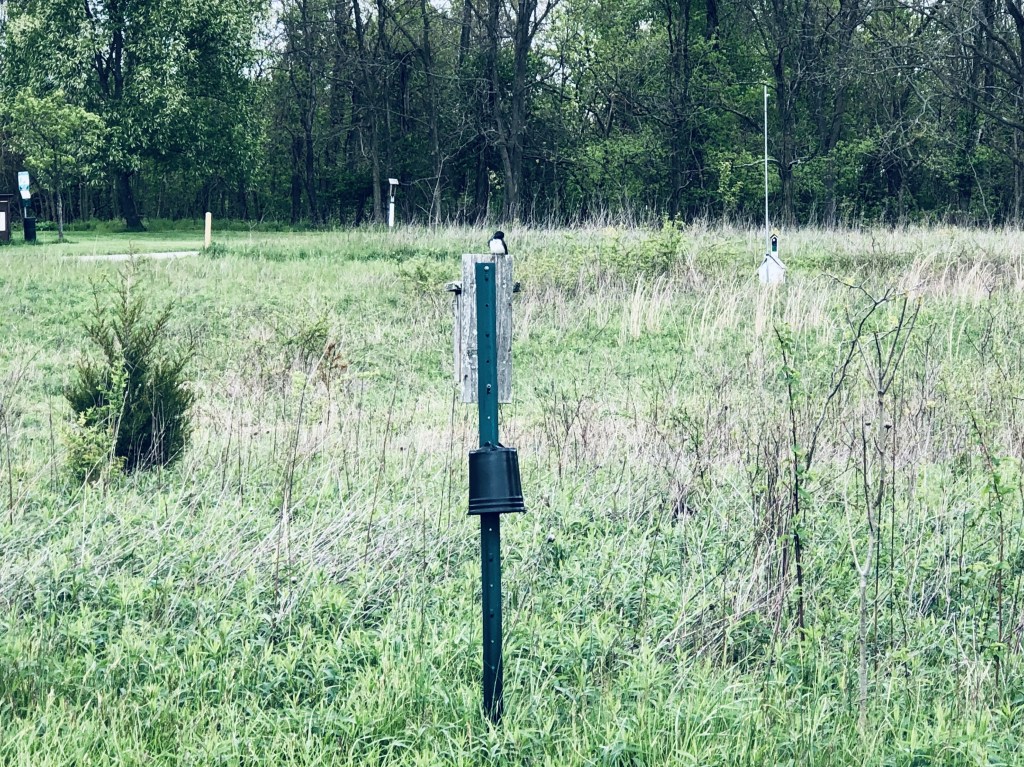
I think this was a tree swallow, though there was a barn nearby! (Giggle, do barn swallows need to live near or within a barn?!?)
I love the watch swallows fly! They seem so carefree.
from all the virus worries. I will share some of the treasures in plain sight from one recent hike.
I only saw one piece of leaf being carried!
Proverbs 6:6-11 (NIV2011) “Go to the ant, you sluggard; consider its ways and be wise! It has no commander, no overseer or ruler, yet it stores its provisions in summer and gathers its food at harvest. How long will you lie there, you sluggard? When will you get up from your sleep? A little sleep, a little slumber, a little folding of the hands to rest— and poverty will come on you like a thief and scarcity like an armed man.”
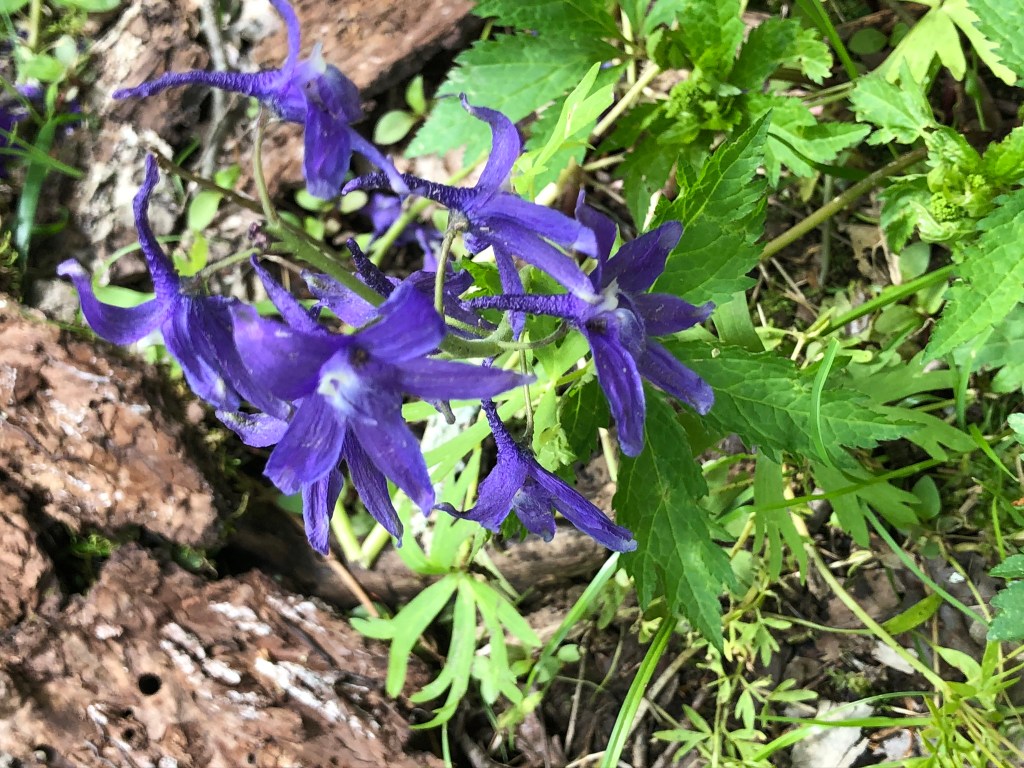
So I guess I better keep walking and staying motivated during this time in my life. Look what we saw on the same walk at Long Branch Farm in Goshen, Ohio, part of the Cincinnati Nature Center. If you know me you know I love purple!
Our walk at the Edge of Appalachia took us to Creek’s Bend Overlook where I recorded this short 31 second video. With all the pandemic stress and arguing about re-opening and death spikes, I found this SO refreshing. The wind makes it a bit difficult to hear the water, but it was makes sound, too. Maybe turn up your volume as we glorify the Lord together.
Canticle 12
Glorify the Lord, all you works of the Lord,
Praise Him and highly exalt Him for ever.
In the firmament of His power, glorify the Lord,
Praise Him and highly exalt Him for ever.

Let the earth glorify the Lord,
Praise Him and highly exalt Him for ever.
Glorify the Lord, O mountains and hills,
And all that grows upon the earth,
Praise Him and highly exalt Him for ever.

Glorify the Lord, O springs of water, seas and streams,
O whales and all that move in the waters.
All birds of the air, glorify the Lord
Praise Him and highly exalt Him for ever.

Glorify the Lord, O beasts of the wild,
And all you flocks and herds.
O men and women everywhere, glorify the Lord,
Praise Him and highly exalt Him for ever.
Well last week was a tiring week. Wednesday (20/5/6)I began having pain between my shoulder blades and noticed some shortness of breath. Thursday both continued. Friday (20/5/8) morning coming up the stairs from sewing I was really short of breath. Also had a cough that was unusual. Finally called doctor in the afternoon. After long phone interview with nurse was told to go to ER. That was about 5 PM. Not Covid, no fever and was not even tested as I did not meet the criteria.
Blood work, chest x-ray, etc. kept coming back with good results. And then, “Oh by the way, we need to admit you.” WHAT!?!?!? Evidently there is a coronary score and I scored 4. If it had been 3 I could have gone home. Waited hour upon hour in the ER to be moved to the floor. Evidently they had to call in more nurses. Many had been furloughed due to lower hospital population because Covid criteria had cancelled elective surgeries, etc.
So by the time testing in ER was done, cafeteria was closed. I had missed dinner. They brought me a turkey sandwich, applesauce, cottage cheese and pudding. When you are hungry, it all tastes okay.
Finally got to bed at 2 AM on the floor. Scheduled Saturday morning for nuclear stress test. And yep, you got it! NPO – nothing by mouth because of testing. At nuclear medicine they had me drink a Sierra Mist sugar free and I got 4 peanut butter crackers. Tasty! Evidently that helps the nuclear medication move through your heart. Back up to my room and nope. Nothing to eat. Missed breakfast. When floor doctor came in she said, “Feed her!” While waiting for cafeteria to deliver lunch I was given strawberry yogurt. Yummy! Lunch was chicken pot pie (albeit, salt free because I was on cardiac floor) peach cobbler, iced tea. Mom would be proud. I was a member of the Clean Plate Club!!
The Nuclear Stress Test results were negative (I DO have a heart!!) and I was released at 1:30 PM Saturday. Bronchitis, steroids, inhaler. No antibiotic as no fever. Cough is better after steroids. Just. So. Tired. Now. after that lousy night with little sleep and short of breath. So all is well! And I will be also!
Am writing this Monday morning (20/5/11) and still short of breath. But so much better than Friday! And SO grateful to be home in our house, our own bed, my own shower and the glory in our garden and yard!!
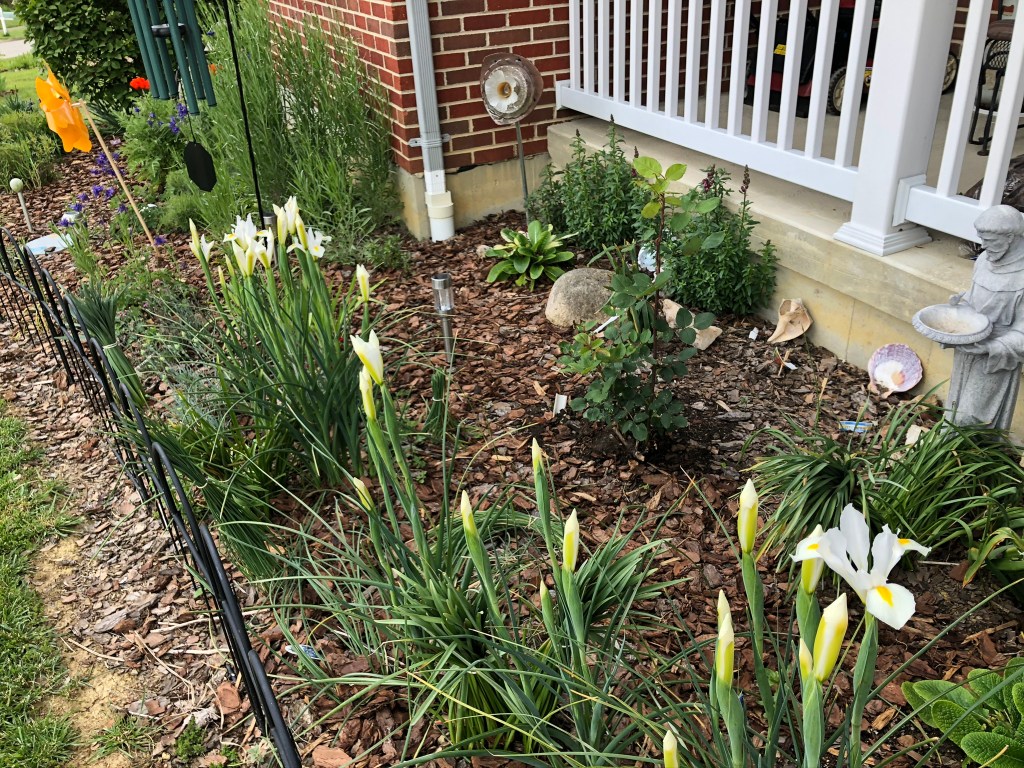
One of the biggest fears during hospital stay was lousy weather forecast with below freezing temperatures for many hours into Saturday morning. I insisted we cover most blooms with sheets before going to the ER. We have white iris with 30 some blooms and orange poppies in bloom. Not counting purple iris, columbine, bachelor buttons, etc. around the yard. The good news is we only lost one poppy bloom. That was all. Bad forecast tonight too as far as frost. Hoping for the best!
Are you old enough to remember Woody Woodpecker cartoons?
According to Wikipedia: “Woody’s character and design evolved over the years, from an insane bird with an unusually garish design to a more refined looking and acting character…” The jungle like call of the pileated woodpecker and jackhammer like tree drumming likely informed the ” insane,” irratic original design.
Now think for a minute of a pileated woodpecker …
Here is a pileated one winter afternoon a few years ago out our bedroom window. Sometimes the ones that come around look larger, like small chickens! Recently we had one on the front feeder out the office window. He was so eager to eat the suet that if you look carefully you can see chunks rolling down his belly! Nope, not white feathers there, just suet.
Psalm 107:28-31 (NIV2011) Then they cried out to the LORD in their trouble, and he brought them out of their distress. He stilled the storm to a whisper; the waves of the sea were hushed. They were glad when it grew calm, and he guided them to their desired haven. Let them give thanks to the LORD for his unfailing love and his wonderful deeds for mankind.
I have been taught for many years that the Old Testament is a foreshadowing of the life and impact of Jesus and the Holy Spirit. Re-reading Psalm 107 while writing this blog I remembered there is a strong correlation to:
John 6:16-21 (NIV2011) When evening came, his disciples went down to the lake, where they got into a boat and set off across the lake for Capernaum. By now it was dark, and Jesus had not yet joined them. A strong wind was blowing and the waters grew rough. When they had rowed about three or four miles, they saw Jesus approaching the boat, walking on the water; and they were frightened. But he said to them, “It is I; don’t be afraid.” Then they were willing to take him into the boat, and immediately the boat reached the shore where they were heading.
And also to
Matthew 8:23-27 (NIV2011) Then he got into the boat and his disciples followed him. Suddenly a furious storm came up on the lake, so that the waves swept over the boat. But Jesus was sleeping. The disciples went and woke him, saying, “Lord, save us! We’re going to drown!” He replied, “You of little faith, why are you so afraid?” Then he got up and rebuked the winds and the waves, and it was completely calm. The men were amazed and asked, “What kind of man is this? Even the winds and the waves obey him!”
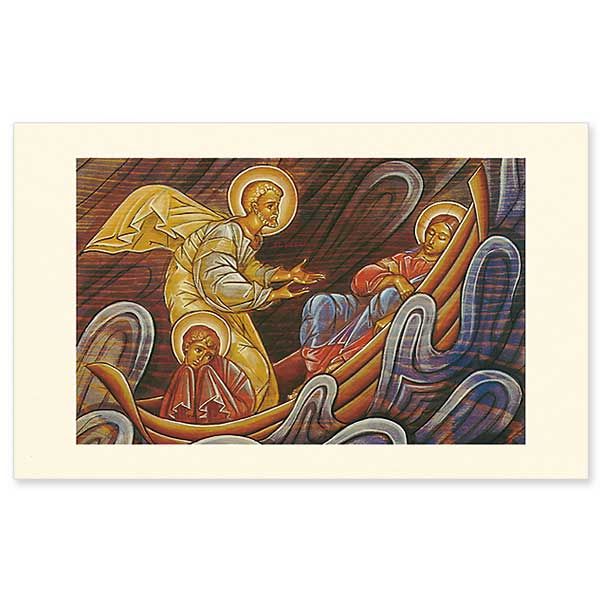
I have the icon below from Printery House in Conception, Maryland. I have provided their link if you would like to order one.
I have this framed print in my prayer area and also 3 x 4 inch cards
“Dark clouds race overhead. Huge waves overtop the gunwales. The boat pitches at a sickening angle. How easily our problems and troubles overtake us like a storm at sea when we forget to let Jesus take charge of our lives!
“The Apostle Peter is depicted in the usual iconographic manner with curly hair and beard. He stands in the boat, pleading with the Lord to awaken and save them. His cloak flares behind him in the wind, suggesting angelic wings, although we know from the Gospels that Peter was much too human to be angelic! The other Apostle huddling in his cloak and looking very frightened is identified for us in barely visible writing as St. John the Evangelist, “the disciple Jesus loved.” He is traditionally shown as a young man in iconography because tradition says he was the last Apostle to die.
“Jesus is dressed in the traditional garb of red tunic and blue cloak. His cloak, called in Greek a “himation” is dark blue signifying the mystery of His divine life. His tunic is red to signify His human blood shed for us all. Christ’s halo, the iconographic symbol for sanctity, is inscribed with a cross and the Greek letters; omicron, omega, nu; spelling “HO ON.” (The “nu” is hidden by the boat.) In English, this becomes “Who Am,” the name used for God in Exodus 3:14: “I Am Who Am.”
“We all have experienced times in our lives when we felt like Peter in this scene, pleading for help and hearing no answer. We all have experienced times when we felt like this portrait of John, overwhelmed by our worries and problems. Pray for awhile with this icon, place yourself in the scene, lay your troubles at the feet of the sleeping Jesus. Then hear His words, “Why are you afraid, you of little faith?” Our Lord Jesus Christ is God, so powerful that even the winds and waves obey Him. Yet He loves you so much that He gave His life for you. Let Him calm your storm.”
I love the comment that Peter was “much too human to be angelic.“
Who better in this unprecedented time on earth, Who better to calm your storm, than the Lord Jesus?