
Across the meadow
a maple tree reaches out a golden arm
it’s hand is crimson, but not the rest
some branches are bare
that crimson hand beckons me
someone else wrote the question
“When the leaves fall with such abandon,
do they not know winter soon follows?"
Reading “May I have This Dance?” by Joyce Rupp, I came across this quote.
I remember sitting on an old porch in Edensburg, Pennsylvania. It was the sixth of October and the hills were radiant with color. The golds and reds of the trees swayed in the strong breeze and I sat there hurrahing the dying leaves. The thought surprised and rather appalled me: How could I love the colors of death? How could I be so callous? How could I eagerly cheer for the forest leaves as they sailed to their death when I so strongly wanted to hold onto life? I was astounded at how easily the trees let go of their treasures. I was dismayed by the stark contrast of this acceptance of death and my own tight grip on life.
Joyce Rupp – October
My brain gets a little confused over chlorophyll and leaf colors. I heard one scientist over simplify saying all the colors are there all year ’round. We just see the chlorophyll as most prominent. At that my brain is going if the green of chlorophyll is mixing with the yellow then shouldn’t the leaves look blue? Arghh! Scientists confusing simple ol’ me.
https://www.fs.usda.gov/visit/fall-colors/science-of-fall-colors
During the growing season, chlorophyll is continually being produced and broken down and leaves appear green. As night length increases in the autumn, chlorophyll production slows down and then stops and eventually all the chlorophyll is destroyed. The carotenoids and anthocyanin that are present in the leaf are then unmasked and show their colors.
A color palette needs pigments, and there are three types that are involved in autumn color:
- Carotenoids: Produces yellow, orange, and brown colors in such things as corn, carrots, and daffodils, as well as rutabagas, buttercups, and bananas.
- Anthocyanin: Gives color to such familiar things as cranberries, red apples, concord grapes, blueberries, cherries, strawberries, and plums. They are water soluble and appear in the watery liquid of leaf cells.
- Chlorophyll: Gives leaves a basic green color. It is necessary for photosynthesis, the chemical reaction that enables plants to use sunlight to manufacture sugars for food.
Certain colors are characteristic of particular species:
- Oaks: red, brown, or russet
- Hickories: golden bronze
- Aspen and yellow-poplar: golden yellow
- Dogwood: purplish red
- Beech: light tan
- Sourwood and black tupelo: crimson
- The color of maples leaves differ species by species:
- Red maple: brilliant scarlet
- Sugar maple: orange-red
- Black maple: glowing yellow
- Striped maple: almost colorless
That makes more sense to me, “As chlorophyll production slows down and then stops – the carotenoids and anthocyanin that are present in the leaf are then UNMASKED and show their colors.”
So in my poem I am uncertain if a red maple seen from this distance is holding the ‘hand’ of a sugar maple? Regardless the leaves are not entirely fallen, but most have. I am truly aware of winter when the leaves of the invasive honeysuckle shrubs fall. Then we are in for the worst winter can send our way. The last couple winters have been very mild. Wonder what climate change will send our way this winter?
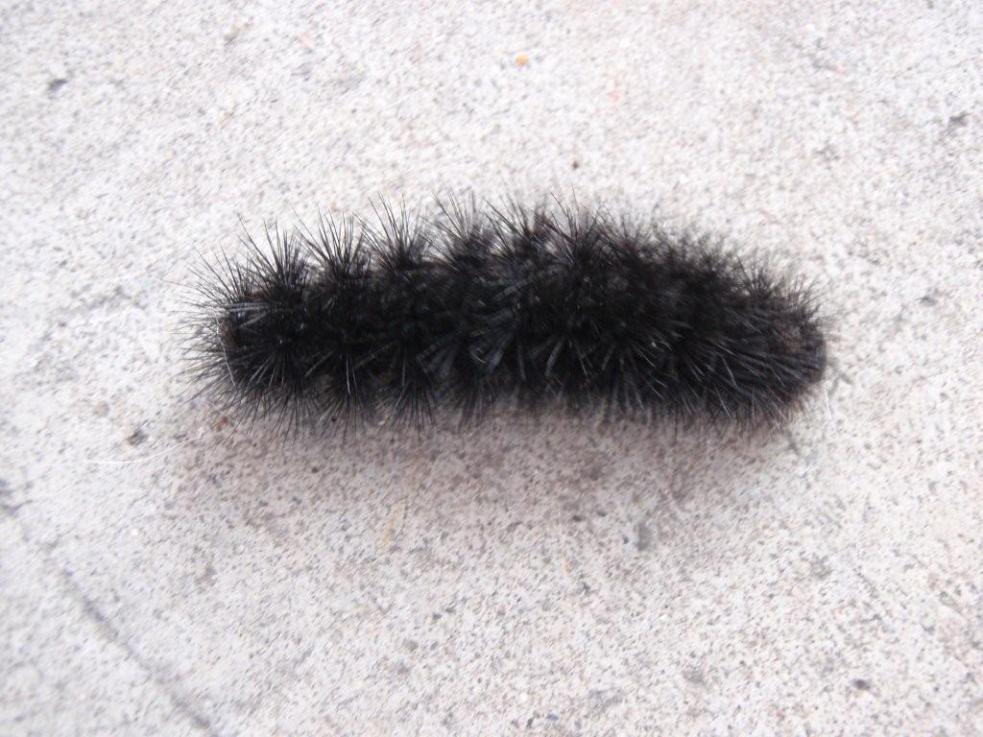
If the folklore abut the woolly bear caterpillars is to be believed this will be a harsh winter. Time will tell!
 Treasures in Plain Sight, A Christian Blog